

Mastering the Art of Poker Deception Through Acting
Everyone knows that poker players are actors. All of us, even the newest fish in the pond, know it’s important not to give away our hands by looking pleased with good cards or displeased with bad ones. At the very least, we learn to act dispassionate.
To Act or Not to Act: The Poker Dilemma
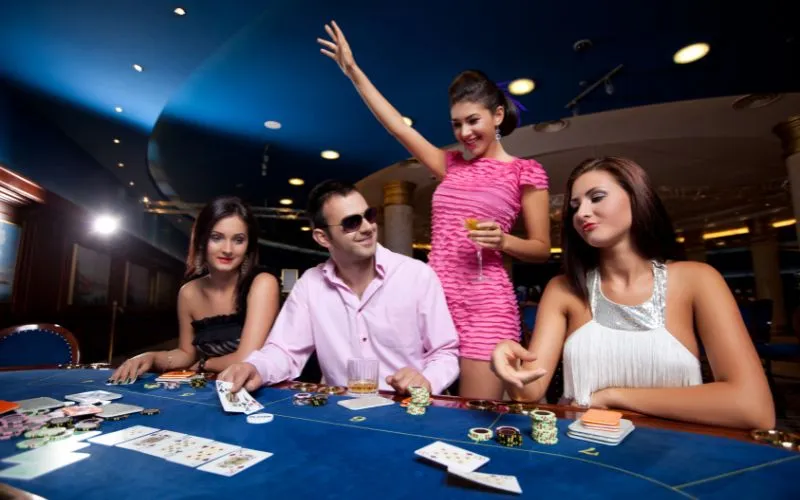
So here’s the question. Since everyone knows about acting in poker, does it do any good to work? One might conclude that bad players are too oblivious to notice what you’re doing, and good players won’t be fooled. According to conventional poker wisdom, your best bet is to display no tells whatsoever – to be mysterious rather than to try and fake out your opponent by acting.
“Schtick that Sticks”: The Art of Effective Poker Acting
But here’s a different take I’ve developed over decades at the feet and in front of the computer. Done correctly, acting does work. The key is to use the right act for the right moment against the right opponent. I call it “schtick that sticks.”
The Strategy: Impenetrable vs. Crafty
You are best to be impenetrable against the best in the poker world. Great players are experts at divining the true measure of your hand by reading what you do and don’t do at the table. But against lesser opponents, I find that there are things you can do that can cause them to do exactly what you want them to do – not 100% of the time, And you may not even be successful more than 20% of the time. But even if your acting helps you 1% of the time, it will show a profit in the long run if it doesn’t hurt your game.
Putting Theory into Practice: A Poker Table Scenario

Here’s an example from a game I was in recently:
Setting the Stage at Mohegan Sun
I played $2/5 no limit at Mohegan Sun – a great poker room in eastern Connecticut. I was at a table with two good (but not great) players and a remaining table of mediocre players. I didn’t judge anyone to be a full-time poker professional.
The Hand: A Battle of Wits
I had been rocking around for about an hour – giving very little action – and getting very little when I raised. I had come over the top several times to win some modest pots. But other than that, I was generally inactive.
Reading Opponents: A Critical Skill
Two players to my left were one of the two good players at the table. He was aggressive but not wild and generally seemed to know what he was doing. He didn’t talk much, but I read him for a guy who knew much about the game.
The Decisive Hand: A Lesson in Bluffing
I had raised the big blind with a pair of tens – Making it $20 – a typical if slightly large pre-flop raise. He made it $45. The other players folded. I figured that, with the tight image that I had, he might be trying to steal from me with his reraise. I called. There was about $100 in the pot.
A Risky Move: Raising the Stakes
The flop was three low cards – with two of them spades. I checked. My opponent bet $50. He seemed a little quick with the bet. I wasn’t sure, but I thought he looked weak – just making a continuation bet on what he saw as my weakness because of my check. He had another $900 or so behind him. I had about $600 at this point. I was crushed if he had AA, KK, QQ, JJ, or trips. But I figured he might have any two big cards or even a mid-sized or small pair at this point, and those possibilities greatly outweighed, in my mind, the chances he was very strong.
The Turning Point: Reading the Situation
So I raised it to $100, and my opponent called. The turn paired the board. I bet $150, hoping he’d fold. He called. That surprised me. I started to think that he might have a premium pair after all.
The Final Act: Sealing the Deal
The river was a low spade, making a flush possible. I had $350 or so left in my stack. He had me covered. The pot was $600. The conventional play here is to check, hoping either that he is weak and will bluff into me so I can call and win or that he’ll check it down and I can show down a winner.
Unveiling the “Schtick”: The Art of Poker Deception
But those plays only work if I have a better hand. And I wasn’t sure anymore. I thought he might have a big pair. So I tried some schtick – hoping to improve my chances that I could bet and get him to fold. I said something cheesy, like, “Well, I guess I’ll try a bet.” I pushed in all of my chips.
The Reveal: A Bluff or a Real Hand?
In short, I exhibited the classic weak means strong tell. I was betting that he was good enough to recognize it as such but not so good that he would see through it to my true weakness. He smiled, looked at his downcards, flashed me his Queens, and then mucked them. He might have mucked them anyway, given my all-in shove. Even so, I can’t help but think that my schtick made at least some difference – maybe the difference between his calling and folding.
Mastering the Art of Poker Deception

There are many variations on this theme. Sometimes, I’ll use some theater, like staring at the board, to convince my opponent that the board didn’t help me – hoping to induce a bet so I can raise. Other times, I’ll give off some hints of weakness by rechecking my downcards when it’s my turn to change and then thrusting my chips forcefully – looking to the experienced player like a bluff on my part (the strong means weak tell).
The Sincere Approach: A Different Kind of Acting
I find there is one other bit of acting that generally works well. Against new players – especially innocent ones (like women who have rarely played in a casino, for example) – I find that acting extremely earnest can work to my advantage by convincing clear opponents to do what I tell them to do. On more than five occasions, I’ve gotten a woman to lay down her hand by telling her sincerely that I had a very big hand and that I thought she should fold for her best interests. You must be able to fake sincerity and set it up by being a friendly, courteous, and helpful player beforehand. But here’s an exchange that occurred.
The Power of Sincerity: Deception in Action
I had been conversing with a woman on my left, asking her about what she did, where she was from, and the like. I told her, honestly, what I did about my wife and kids and about playing poker regularly in a casino. We struck up a poker table friendship. In this particular hand, she had been leading the betting, and I had been calling with a flush draw – starting with JT suited. She raised to $10 before the flop. I called. She bet $10 on the flop. There were two of my suits. I called. She checked on the turn after I checked. On the river, I looked at her and smiled, and then said I had hit trips. I bet $30. She checked her down cards. As sincerely as I could muster, I said, “I think I have you beat, and you should fold.” She smiled, looked down, flashed me her Kings, and then mucked her hand. I didn’t even have a pair – just JT and a busted flush draw.
Ethical Considerations and Conclusion
I suppose that for the demanding, this may raise ethical questions. But all forms of acting and deception are perfectly okay at the poker table (in some clubs in the UK, I’ve been told this kind of coffee housing is prohibited). The bottom line is this: acting does work against all but the best poker players. Just be careful that in your drama, you’re not exposing yourself more than you think you are. You don’t want your schtick to get stuck on you!


