

Avoiding Pitfalls: Key Beginner Mistakes Often Make
Hopefully, you’ve already absorbed much knowledge from our poker lessons. There’s still much to learn – you’ll never stop learning about poker. Before moving on to the next stage of your poker development, let’s review some typical mistakes beginners make when playing Texas Hold ’em. Embarking on a new journey, especially as a beginner, is both exhilarating and challenging. Whether delving into a new skill, hobby, or field of study, the early stages often come with many potential pitfalls that can hinder progress and dampen enthusiasm. In the quest for mastery, it’s essential to recognize and navigate these common stumbling blocks.
This article, “Avoiding Pitfalls: Key Mistakes Beginners Often Make,” delves into learning and growth, shedding light on newcomers’ missteps. By understanding these pitfalls, individuals can navigate their learning journey with greater awareness, resilience, and a strategic approach, ultimately accelerating their path to success. Although one or two of the mistakes we’ll mention are relevant to no-limit hold’em, the majority applies to all forms of hold’em and other poker formats. Please use this lesson as a guide so you don’t fall into the same traps.
The Top 10 Typical Beginner Mistakes
In no particular order, here are our top ten typical beginner mistakes:
Playing Too Many Hands

One of the main mistakes new players make is feeling like they must play every hand. They may become impatient, feel left out of the action, or don’t want to look weak in front of their friends. It could also be that they don’t know any better. Jack, Queen, King, or Ace seems good if you don’t understand good starting hand selection.
The problem with playing too many hands is that you will only hit the flop a small percentage of the time, and even if you do hit the loss, it’s hard to know if your hand is the best. Until you understand how to play beyond the cards, you will mostly be playing based on what you are dealt with, and if you are involved in too many pots, the next thing you know, all of your chips will be gone.
Playing Scared
While some beginners play with reckless abandon, many play with fear. Having not played many hands, new poker players are often afraid to make a mistake or are scared to lose. Because of this, they will fold until they know they have an unbeatable hand. Fear can also manifest itself into paranoia, where a player assumes that anyone betting aggressively must have a monster hand (often referred to as “monsters under the bed”), and they will fold all but the best possible hands. The only way to get over this is to log in time at the poker tables and practice trusting your instincts.
Getting Committed to a Hand
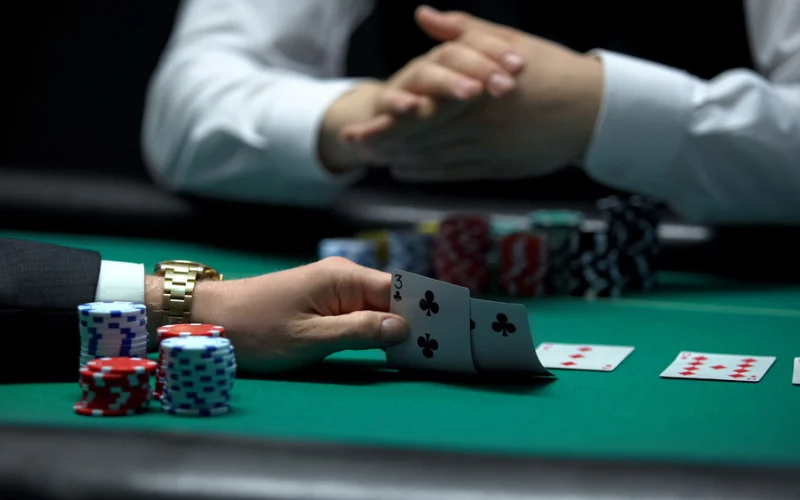
Because of the competitive nature of poker, beginners think that poker is like other sports where “giving up” is considered a bad thing. While you shouldn’t play passively, poker is not like other sports and is often the correct play to fold. Getting emotionally attached to a hand is easy when first playing poker.
This might be a pre-flop hand like a pocket pair or making a pair on the flop. You stay in a hand because you don’t want to get bluffed out of a pot or look weak – or because your competitor says there is no way to win if you fold; unfortunately, by continuously calling bets, you never really know where you stand in the hand until it’s too late.
Improper Bet Sizes
This one is primarily related to no-limit and pot-limit games. Understanding how to correctly size your bets in these games to manipulate the action comes with the experience of playing poker. However, such common betting mistakes beginners tend to make are easy to fix. New players often raise or bet at the extremes – meaning too little or too much.
Some common examples are raising the minimum pre-flop in no-limit games when several players have entered the pot or expanding 5x-6x the size of the blinds when you first enter a hand. Miss-sizing of bets also occurs after the flop. Beginners will bet the minimum with big hands (two pairs or a set) when many players are in hand, allowing them to draw cheaply to a better hand.
Conversely, they may also over-bet to “protect” their writing. In most cases, these are both incorrect. Ideally, in poker, you want to bet an amount that maximizes how much you can win and minimizes how much you can lose.
Chasing
Similar to #3, a beginner will often stay in hand, hoping other cards will appear that could improve their writing. This could include straight and flush draws and calling bets to pair an Ace or a second card for two pairs. Calling on a tie isn’t necessarily wrong, but beginners often make the mistake of chasing improper pot odds to do so. While you might hit the card(s) you need in one particular hand, you will lose money in the long run if you are chasing without the right odds.
Overvaluing Marginal Hands

A common mistake among beginners is playing with hands that look good on the surface but hold little value or are easily dominated by other hands. In Hold ’em, examples include suited cards or face cards with bad kickers (K3, Q5, etc.). Additionally, this includes high-hand combinations like QT, KJ, or A9.
While these hands are not unplayable, knowing how to play them comes with experience. The challenge with these face cards is that you can be confident that there aren’t many flops and that you have the best hand. Even if you make a pair, you can easily be out-kicked or beaten by a higher-pocket couple.
Letting Emotions Affect Your Play
Whether from a bad day at work or a bad beat at the table, emotions can affect how you make decisions. This can result in unprofitable poker actions like chasing losses, making desperate moves, or allowing your ego to take over. Beginners often make rash, emotional decisions that can act like blinders, preventing them from taking in all the necessary information to make a smart decision. Stuff happens. So, step back and reset your mind if you start making emotional decisions in a poker game.
Playing Out of Position
Many other factors weigh into a poker decision beyond just the cards. Your position concerning in which the action occurs. Acting last in hand lets you see how everyone else will work before deciding. This is a very powerful concept. The mistake beginner poker players make is entering a pot or calling a raise out of position without a plan. They get lost in the hand because they don’t have enough information about where they stand.
Bluffing Too Much
Some players who are new to the game think poker is all about bluffing. While it is satisfying to bluff someone out of a pot, you should develop an optimal percentage of bluffing to avoid becoming predictable.
For a bluff to work, your opponents must think you have a real poker hand. If you are always bluffing, your bluffs will not be believable, and people will start to look you up. Another component to bluffing is that your bets need to tell a credible story, and you should be representing a particular hand instead of just random aggression.
Playing Above Your Bankroll
Even if you are only playing poker recreationally, it is still important to manage a poker bankroll. Most beginners do not understand the role that variance plays in poker.
You can play great but still go through a long losing streak. If you don’t manage your poker money properly and play within your limits, you will burn through your cash. Even if you develop the skills to play at a higher level, you will go broke if you don’t have the bankroll to withstand the inevitable variance of poker.
Mistakes Are an Opportunity to Learn
Mistakes at the poker table can prove costly, but as a beginner, you should see them as an opportunity to learn. Don’t worry if you’re guilty of making any of the mistakes listed in this lesson. Everyone who plays poker makes mistakes all the time. Skilled poker players make fewer mistakes. Hopefully, you know what needs improving and what parts of your game you should consider working on.


